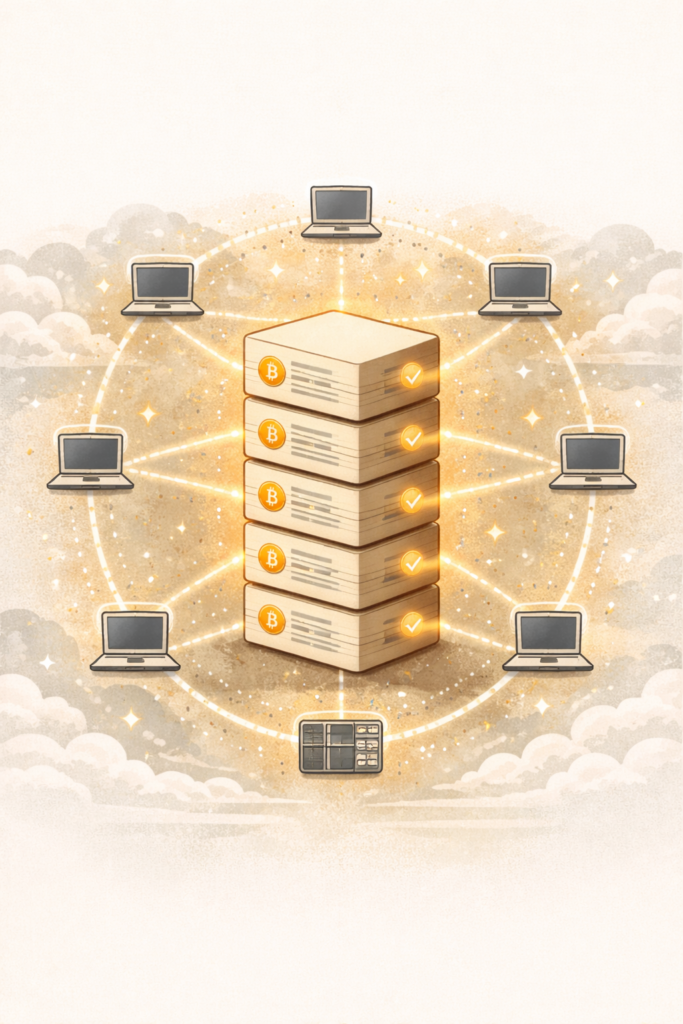
It might look like, from what has been discussed up to now, that Bitcoin is the perfectly balanced, fair and secure system. All transactions are verified by nodes, the miners compete to get their blocks added and their block reward, and this mechanism seems to keep the entire system running without anyone controlling it. But, if we look a little deeper, a problem can be spotted. The mining is a not easy operation. Specialized hardware and a lot of electricity is required for a process that, over time, becomes very competitive and exclusive. This begs the question, if mining becomes too expensive, won’t a small group of powerful miners take over?
We can analyze the history of Bitcoin mining to understand how this came to be. When the Bitcoin system was launched, ordinary computers were enough for the mining activity. Everyone was able to run mining software on their PC and, eventually, gain a prize in BTC. Over time, with more participants involved, the difficulty of the cryptographic puzzle used to add blocks grew considerably. This made mining equipment very specialized and increasingly efficient machines, dedicated only to the Bitcoin mining. Gradually, mining went from a fun activity, or an extra income opportunity, to an industrial, large scale production process.
As the race to mine bitcoins became more competitive, miners started to gather together, forming what are called “mining pools.” A mining pool consists of several miners who combine their computing resources and cooperate to solve the puzzle and achieve the mining of a new block. By pooling resources together, miners reduce the variability in their revenue, and can be paid more frequently than they could achieve alone. All mining pool members share the same amount of computing power that the pool has. When a block is successfully mined by the mining pool, the bitcoins obtained by that block reward are distributed proportionally among the members who provided the computer power.
However, as more people join mining pools, we again see a problem: an increase of centralization of mining power. In fact, a single mining pool can easily possess a huge share of the Bitcoin network hash power and thus the capability of influencing the selection of the transactions to include into the block, or worse, the capability of launching a 51% attack on the network. An attack based on the 51% of the network computational power can even enable a user to rewrite the recent history of the Bitcoin block-chain. Fortunately enough, it’s nearly impossible to achieve a 51% attack due to its extreme cost. But the threat is still there and that might represent a weakness for the Bitcoin system itself.
Although this tendency towards centralization does not completely ruin the system it must be said that, in fact, Bitcoin cannot become a centrally controlled system by few mining pools since any node of the network, no matter if he is a mining pool participant or not, is able to decide whether to consider a block valid or not, and if one mining pool starts to mine invalid block (by trying to fork the chain, for example) all the other nodes are supposed to stop mining it and continue to build up on a valid chain.
We can thus observe that Bitcoin is a resilient system, resistant to external control thanks to the mechanism of independent nodes which validates blocks and miners which compete against each other. While the efficiency argument may make you think that Bitcoin could easily become a system controlled by few large organizations, its fundamental principles as well as economic reasons assure the decentralization that was at the heart of the project.
This reveals us something important about Bitcoin. Despite the strength of its core design, it’s a system built to serve a purpose: transferring and storing value. As such, it does not support complex processes such as programmable agreements or distributed applications.
The existence of such limitations opens a new question: would it be possible for the blockchain to do more than simply transfer value? Could it be used as a development platform to automate logic and build applications?